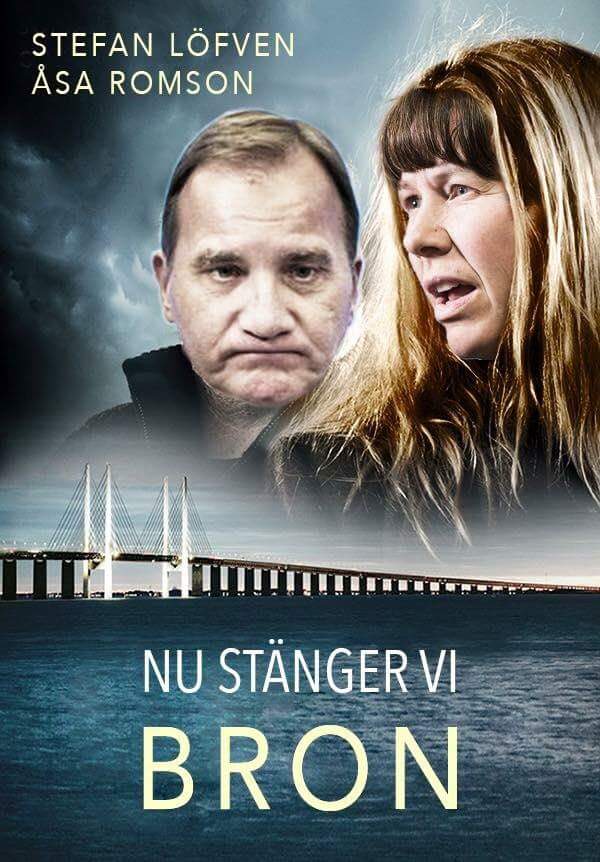
Ja, broen lukker jo ikke med klap og det hele, svenskerne begynder at forlange ID og pas, noget man for bare en måned siden ville være “nazist og zenofob” for. Svenske politikere er en dårlig vittighed. Alle top politikere har påstået, at landet har haft en “reguleret indvandring.” Enhver har kunnet se, at det aldrig har været tilfældet. De har lukket otte (8) gange flere ind end EU gennemsnittet, det store flertal har de ingen anelse om, hvem er. Der er adskillige krigsforbrydere, opdager de efterfølgende og dertil titusindvis af ganske almindelige forbrydere.
Titusinder af mennesker uden ID, og “børn” i 30 erne, er lukket rutinemæssigt ind. Man skal se på, hvad de har gjort. Ikke høre på, hvad de siger. Og det de har gjort vidner klart om én ting: Det har drejet sig om at få etnificeret Sverige i en så Helvedes fart, at enhver fokelig modstand ville stå over for et håbløst fait accompli. Det har ingenting haft med “internationale konventioner” at gøre, kun med ideologi – altså en fiks idé hos den såkaldte elite.
Svensk politi samler nu også en større styrke, der skal prøve at finde titusindvis af illegale og smide dem ud. For ganske kort tid siden, var disse såkaldt “papperslösa”, som nød alle velfærdens goder som hospitaler, tandlæge og skolegang. Bare at sige “illegal” placerede en til højre for Djengis Khan.
Disse menneskelige vitser er ikke blevet klogere, de har blot pludselig opdaget, at de var ved at drukne landet i deres egen godhed. Det er mig en virkelig gåde, at nogen har turdet betro dem deres skattepenge. De er amatører. Havde de været ansvarlige, havde de for over ti år siden lagt an til en blød landing i stedet for den chrash landing, de har foretaget nu.
Ydermere vil de ikke røre SD med en ildtang, som har haft ret i tyve år. Det sidste er kun fordi, de ikke er vant til konkurrence, de er ikke demokrater og ikke bryder sig om at nogle kommer og vil gnave ben, de betragter som deres for evigt. Svenske vælgere burde have udslettet disse partier for længst. Lad mig sige, med fare for at gentage mig selv: De sidste fyrre års ledende, svenske politikere, hører hjemme i en retssal. Regeringen redo stänga Öresundsbron. Det avvikande landet i norr. Den sorglösa omoralen
Eks. kulturminister: “Fjordman sender folk i armene på IS”
Hadia Tajik er en norsk-pakistaner, der er tidligere kulturminister, nu er hun næstformand i Arbejderpartiet. Sproget er nynorsk, hvilket fordobler læsetiden for en dansker:
Peder Are Nøstvold Jensen, alias Fjordman, er «ekstrem», meiner leiar i justiskomiteen Hadia Tajik (Ap).
Hadia Tajik leste intervjuet i gårsdagens Dagen med Peder Are Nøstvold Jensen der han tek til orde for å nekte muslimar tilgang til Europa. Menneskerettane vil han setje til side for å kunne nekte muslimar rett til å søkje asyl i Europa, fordi han meiner dei er ein trussel mot tryggleiken.
– Eg spør meg sjølv kva han ynskjer å oppnå når han seier at alle muslimar skal stengjast ute frå Europa. Er det fordi han trur vi slik kan unngå terror? Han risikerer å auke oppslutninga om militant islamisme ved å sende personar rett i fanget på dei. Han risikerer å gje IS rett i at det pågår ein kamp mellom muslimar og Europa. Ved å berre gje menneskerettane til einskilde gruppe av menneske, og på den måten seie at somme menneske er meir verd enn andre, kjem han med utsegner som likner på det IS står for, seier Tajik.Fjordman sender folk i armane på IS
Peder Jensen svarer på Facebook: