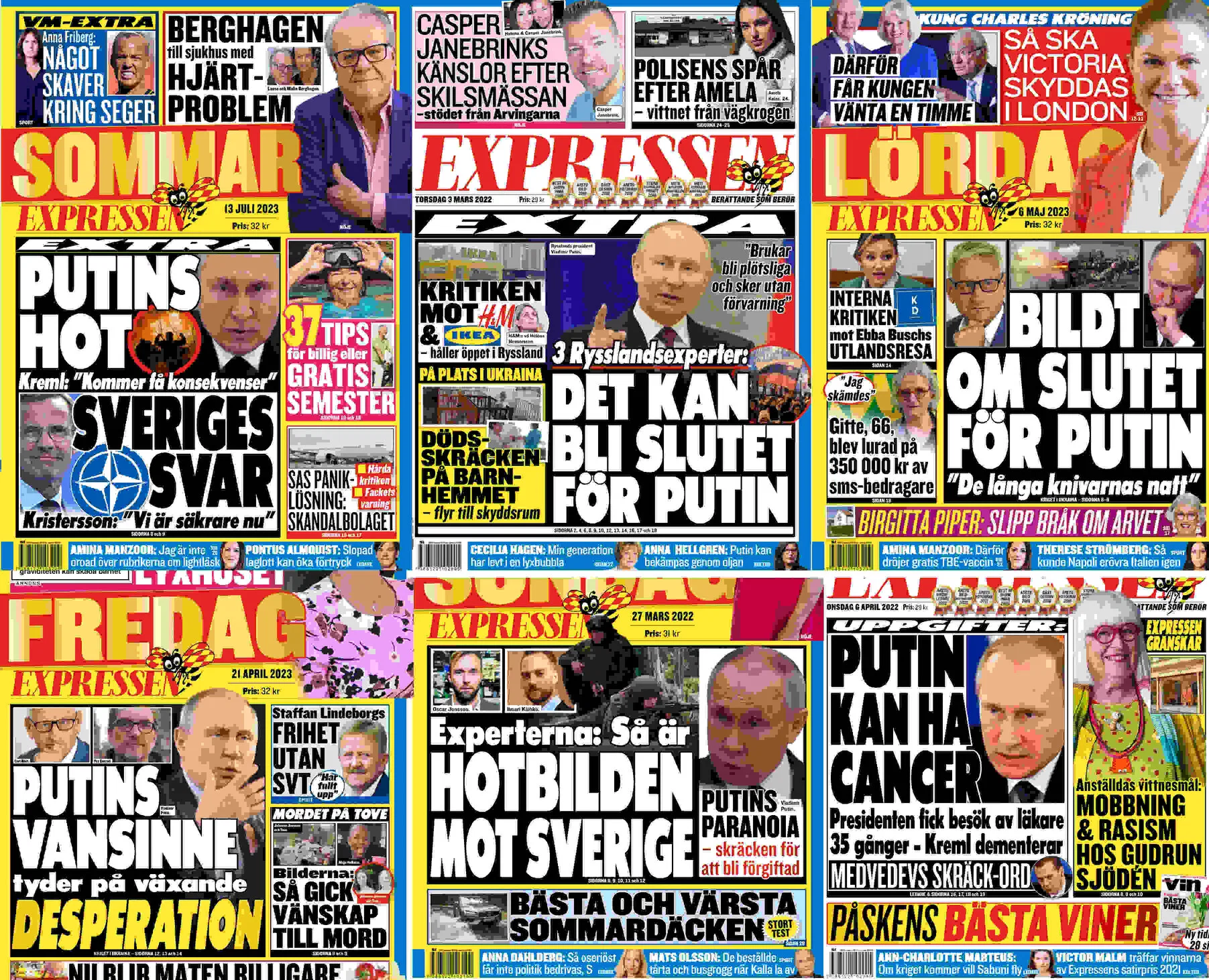
“Putin’s agents hiding in Sweden”. “Russian violence against Ukrainian children in Putin’s camps”. Just another day in the Swedish supermarket queue.
How Scandinavia Abandoned Neutrality and Lost Its Diplomatic Power
Af Pelle Taylor
For my generation, the Nordic Region was the world’s quiet room. It issued the Nobel Peace Prize, hosted the spy swaps, and brokered the talks that nobody else could host. The Cold War raged in central Germany; in the Baltic, it was scarcely audible.
Stockholm was a northern Vienna, a place where diplomats said the things they could not say at home. There were few armaments in the Baltic Sea and fewer illusions. The Swedes built a hedgehog army and kept their own counsel, the Finns stroked the bear’s stomach, and the result was peace and prosperity in equal measure.
That world is gone. Walk into a Swedish supermarket today and the headline placards by the till for the Aftonbladet and Expressen are lined with the same headline you saw yesterday and will see tomorrow: “Putin is dying”, “Putin has cancer”, the Russians are scavenging washing machines for microchips, the “tide has turned”. Roughly a thousand of these things have now been devoted to one man since the “Special Military Operation” began. Near where I live, the country road between Gothenburg and Stockholm is being widened to NATO standard so that military vehicles may travel from the Atlantic port to the capital. The chief of the Swedish army warns that Russia may seize Gotland any day now. Rubio comes to Helsingborg and calls Sweden America’s best ally. New deals are struck. At the Såtenäs airbase, the jets take off and land all day.
“Putin’s agents hiding in Sweden”. “Russian violence against Ukrainian children in Putin’s camps”. Just another day in the Swedish supermarket queue.
Two small nations, Sweden and Finland – which spent much of the twentieth century perfecting the art of staying out of other people’s conflicts – have, in the space of two years, effectively handed their foreign policy to Washington. To understand how reckless that is, you have to understand what they threw away.
The muscular peace
The word for it was coined as an insult. Franz Josef Strauss minted ‘Finlandisation’ in the 1970s and the American neoconservatives picked it up with relish – a byword for a small country crawling before a great one. The reality was almost the opposite. Finlandisation, properly understood, was not lying down. It was a hard, unsentimental, and rather brave policy of accommodation, conducted from strength.
Its finest exponent was Max Jakobson, Finland’s most gifted diplomat of the era and very nearly its first UN Secretary-General–blocked in 1971 not by the West but, with some irony, by the Soviets, who could not abide a bourgeois conservative in the chair. Jakobson wrote the best defence of accommodation that anyone has written, and his books have been allowed to fall out of print, which tells you something about which arguments a wartime culture wishes to forget. (My previous essay here on Substack is devoted to his works.)
Jakobson’s case was never that Finland should grovel to survive. It was that Finland could keep its free press, its prosperity, its Lutheran faith, and its Western consumer lifestyle precisely by taking the Russians seriously instead of laughing at them. The Finns refused Marshall aid because Moscow disliked it. They paid their reparations to the last rouble. They signed their treaty of friendship. And in return, they were left alone.
The decisive test came in 1948, the same year the communists seized Czechoslovakia. The Finnish communists planned their own coup; the prime minister, Juho Kusti Paasikivi – the very man who had negotiated with Stalin in 1939 and counselled accepting the least bad deal – simply put it down. And Moscow did nothing. It did not protest, did not intervene, did not care. This is the heart of the matter, and it overturns half the theology of the Cold War. Stalin was not, in the Finnish case, interested in spreading the ideology. He wanted a regime on his border that would not be used as a corridor for an attack on Leningrad. Give him that security and he was indifferent to the form of rule. A conservative, capitalist, church-going Finland suited him perfectly, so long as it could be relied upon.
The realist tradition – the one to which I belong – needs this history badly, because it is the cleanest available proof that security, not ideology, drove the men in the Kremlin. The Finns grasped it and built a whole statecraft upon it. Urho Kekkonen ran the country for a quarter of a century, met the KGB resident in the sauna once a week, and went rafting in Siberia with Kosygin to settle whatever needed settling. Wags called his Finland ‘Kekkoslovakia’ – a country with a free press in everything but its coverage of Russia. The joke flattered the comparison. You could buy the same goods in Helsinki as in Copenhagen or London, watch the same TV programmes, and travel where you pleased. The Russian threat was, if anything, talked up at home, because it was useful to Kekkonen to be the one man who understood the Russian soul.
And the dividend was extraordinary. The Helsinki Accords of 1975 – which smuggled human rights into the language of East–West relations and gave the dissidents their charter, used by Václav Havel and others – were brokered by Finnish diplomats trusted by both sides. It is not Reagan and his spending that broke the moral backbone of the Soviet empire. It was, in no small part, the Finns. They were the indispensable interlocutors, neutral ground close enough to Leningrad that the Russians felt safe arriving there. They were trusted.
The Swedish disease
Sweden’s instinct ran the other way, and it ran deep. Call it the eastern addiction. The Vikings colonised the Russian river routes; the Rus took their name from the men of Roslagen, a region north of Stockholm. The early Swedish kings made Stockholm a mustering point for eastern crusades; the young state’s psychology was simple: conquer the East. Alexander Nevsky defeated the Swedes in 1240, two years before he saw off the Teutonic Knights, and the two enemies were near enough the same thing. Charles XII led the first of the three great invasions of Russia, before Napoleon and Hitler, and broke himself on it at Poltava in 1709. Poltava is to Sweden what Waterloo is to France – the end of something.
The addiction outlived the empire. In the First World War, the aristocracy itched to fight the Russians and reclaim Finland; common sense and a Social Democratic government held it back. In the Second, the Swedish navy was honeycombed with Nazi sympathisers, the general staff drew up bombing runs on Leningrad, and on Hitler’s fiftieth birthday in 1939, the nation’s top military officials visited him in Berlin. The entourage brought with them a statuette of Charles XII from a Swedish-German friendship association and a message. The statuette was a gift from “Swedish men and women who see in the German leader and People’s Chancellor Adolf Hitler the saviour of Europe”, and held that Charles XII, in “his hard historical struggle, was animated by the same spirit” that they believed they had found in Hitler’s “world-historical achievement for the founding of Greater Germany and the upholding of Europe”. 1
The meaning needed no caption. Here was one invader of Russia; there, perhaps, was the next one. The Social Democrat government held off the militarists’ pressure and ensured that Sweden did not fall back into its old ways. Neutrality held, the Jews were taken in, the iron ore flowed to Germany at a handsome profit, and Sweden emerged from the war richer than Switzerland, its industry intact and its reputation spotless. Had the militarists got their way, it would have ended on the losing side and been severely punished like the rest of the Axis.
The man who first broke the eastern addiction was a Frenchman. Jean-Baptiste Bernadotte, Napoleon’s marshal, was recruited to the Swedish throne in 1810 by an aristocracy that wanted him to fight the Russians, and instead, he read his adopted countrymen better than they read themselves. He saw Napoleon would overreach, chose the winning side, and turned Sweden inward towards self-mastery, education, and industrialisation, rather than mastery over others. His dynasty sits on the throne still. The lesson of the Bernadottes is the lesson of all good Scandinavian diplomacy: the discipline to want less than you could grasp at.
Jean-Baptiste Bernadotte (1763-1844), one of Napoleon’s top marshals. Made heir to Swedish throne 1810, set Sweden on a course of prudent neutrality that lasted until Sweden joined NATO in 2024.
The price of forgetting
Which brings us to Olof Palme, the Swedish Kennedy, shot dead in a Stockholm street in 1986. Palme came from precisely the aristocratic families that had funded the crusade against the Russians, and grew into their renegade.
For the Palmes, the crusade was not a distant inheritance but the family trade. Thanks to the Tsar’s habit of exiling Finnish nationalists, a lively traffic of émigrés passed through the Palme home – first the great timber villa at Djursholm, then the apartments of Östermalm. Exile Finns were a fixture of Stockholm after the turn of the century, “international yet ur-Finnish figures”, as Sigfrid Siwertz put it in his 1916 novel, “who reeked of tangled deals, liquor, strong tobacco, French novels and the Kalevala”.
Palme’s grandfather Sven ran the life-insurance house Thule, whose offices at Kungsträdgårdsgatan 14 served as a clearing-house for the Finland cause – it was said, only half in jest, that here was the true address of the Finnish foreign ministry. Rivalries within the family, over who should lead the movement and over an inheritance left by a death in 1907, did nothing to cool the cause.
And when the hour came in 1917–18, it was Sven who organised the brigade of Swedish volunteers that went to fight for Mannerheim’s Whites in the civil war. His son Olof, the prime minister’s uncle and namesake, dreamed aloud of reuniting Finland to the Swedish crown. He granted that the Finnish-speaking majority had no wish to become Swedish subjects again – “In every Finn”, he wrote, “there hides, despite centuries of cultivation, a barbarian, who still requires care and chastisement”– and concluded that this was the very reason to strike: “Finland wishes only to be freed from the claws of the Russian eagle. If Sweden intervenes, Sweden too shall have its reward.”2
Olof Palme (1927-1986). Swedish prime minister, wanted a calm relationship with the USSR. He was killed on an open street in 1986. His uncle, also called Olof Palme, was a fervent activist against Russia in 1918.
Decades later, his nephew, the prime minister, well understood the Swedish disease, the anti-Russian mentality, the latent Swedish imperial instincts, and steered hard around it, pouring his countrymen’s idealism into Vietnam, the anti-Apartheid struggle, the non-aligned world – causes safely distant from his own country’s eastern border. For this, the military, the intelligence men, and a good many businessmen with their eyes on London judged him a traitor and a Soviet stooge. The assassination remains unsolved.3
Conclusion
The secret of Scandinavian diplomacy was never neutrality as a posture. It was the realist’s discipline: take your great neighbour’s security seriously, refuse the moral vanity that mistakes proximity for principle, and keep your own counsel. Bernadotte wrote the manual. The Finns under Paasikivi, Kekkonen and Max Jakobson embodied it. Palme died for a version of it.
Alas, tomorrow morning the placards by the supermarket till will carry the same headline they carried yesterday, and the day before that, and Sweden will believe a little more of it.
A country that once specialised in not being lied to has agreed to be lied to in chorus. IPSOS now finds Swedes the most willing of any Western nation to send their soldiers to Ukraine: the descendants of Bernadotte’s prudence outpacing every other people in eagerness for someone else’s war.4 The wisdom is not lost; it is mislaid, somewhere between the Charles XII statuette and Bernadotte’s grave. One hopes it is found before the bill comes due.5
1
Staffan Thorsell, Mein lieber Reichskanzler! Sveriges kontakter med Hitlers rikskansli (Stockholm: Bonnier Fakta, 2006), chapter När Hitler fyllde femtio.
2
Henrik Berggren, Underbara dagar framför oss: En biografi över Olof Palme (Stockholm: Norstedts, 2010), Chapter 2
3
The Palme investigation was closed in 2020 by chief prosecutor Krister Petersson, on the grounds that the suspect – “the Skandia Man”, Stig Engström – was dead.
However, Chief public prosecutor Lennart Guné late last year reviewed the case against Engström. He found the evidence wanting.
“My overall assessment is that the evidence is too weak to hold him as the perpetrator,” he told SVT. “On the material now available it is not possible to prove who the perpetrator was, and there is no reason to suppose that further investigation would decisively alter the evidentiary picture.” So, the murder is, once again, officially unsolved.
https://www.svt.se/nyheter/inrikes/motivering-till-nedlaggningsbeslut-om-palme-utredning-andras
4
https://www.ipsos.com/en/global-attitudes-ukraine-war
5
I gave a talk, the Secrets of Scandinavian Diplomacy, yesterday to the Rising Tide Foundation on the themes of this essay. My thanks to Matt Ehret for hosting such an enjoyable and stimulating event.
“‘Finlandisation’ … – a byword for a small country crawling before a great one.” Well, that is what we have now, but in relation to the USA. For both Sweden and Finland. And most other countries in the EU. At the same time, the USA is crawling before Israel. We have become vassals of a vassal. Like peasants in a feudal system. All we are waiting for now is the command from our master to march into the meatgrinder in the East. The Swedes may go more willingly than others, but everyone will go if ordered. Soldiers from many EU… Read more »
Både Petrodollaren som reservevaluta og USA som eneste supermagt er færdige inden 2035; taler du mandarin?
Jeg har forsøgt at tale med dem, men de svarer ikke.
Så jeg skræller og spiser dem.
Et pudsigt tilfælde:
Da svenskekongen Carl 12 angreb Rusland i 1700-tallet for at erobre landet, skød han sig selv i foden – han fremturede og Sverige blev banket ved Poltava/Ukraine i 1709.
Under slaget om Poltava, skød russerne ham fysisk i den ene fod.
Da han mange år efter angreb Norge for at stjæle det fra Danmark, blev han fysisk skudt i hovedet (med en sølvkugle?) og døde af det.
For Pelle Taylor er ‘Scandinavia’ demonstrativt det samme som ‘Sweden’.
Intetsteds i artklen er Norge eller Danmark nævnt.
Norge & Danmark var medlemmer af Nato lige fra starten.
På trods af, at alle 3 skandinaviske landes historier er ekstremt sammenfiltrede på på statslige og det personlige plan.
Kun Finland inddrages i denne svenske saga, skønt Finland ikke er skandinavisk, men Nordisk.
Overensstemmelse med virkeligheden fremmer forståelsen.
Rigtigt, men hvis du hører You Tuben nederst, kan du høre at han har en leksikalsk viden om dansk og skånsk historie, så det er nok mest et tilfælde
Jeg tror ikke, at Pelle Taylor læser det samme leksikon som jeg.
Det han skriver, er så forudindtaget Sverige glorificerende, at han må anses for en svensk chauvinist, hvad angår tidligere tider.
Han udgydelser om Sveriges moderne tid, kan jeg ikke bedømme, men i mine øjne er han mere svensk patriot end skandinavisk nutidshistoriker.
Så af den grund er jeg ude.
Quote: “The Vikings colonised the Russian river routes; the Rus took their name from the men of Roslagen, a region north of Stockholm”
Fejl1)
Vikingerne koloniserede ikke russiske flodruter. De byggede et par små udposter omkring Ladoga søen. Koloniseringen er nationalromantik.
Fejl 2)
Ikke mange russiske historikere er enig i ‘Roslagen’ teorien, der baserer sig ngle få sætninger i “Nestor-krøniken”, en samling kedelige kildeskrifter fra 1100-tallet (langt efter vikingetiden).
Pelle Taylor kunne undersøge sine kilder bedre.
Den svenske avis Expressen, er det ikke en løgnagtig sladder-avis cirka svarende til BT i Danmark, som var en endnu billigere og tarveligere avis end EB. EB var i åre- vis en avis der på visse punkter var god til at levere en- kelte vigtige nyheder og oplysende artikler, i modsætning til BT som koncentrede sig om kongerøgelse, hof-snak, sladder, sludder og usympatisk hyklerisk propaganda. Og i den senere tid er EB den eneste avis som dækker den eksploderende bande-kriminalitet i Danmark. Bare i de sidste 14 dage har EB fortalt om stribevis af svindel- sager, overfald, mord og påsatte… Read more »
“Den svenske avis Expressen, er det ikke en løgnagtig
sladder-avis cirka svarende til BT i Danmark”
Jo, ungefär. Den ägs av Bonnier, som också har den “finaste” tidningen i Sverige, DN.
Det sker, man får det, man peger på!
En større del følelseslabile småbørnsmødre stemte på Mettes utopi-valgløgn: “maksimalt 14 børn i indskolingsklasserne med 2 lærere i hver”, Men endte med at ´frogge´ os andre op med BÅDE Mette “mRNA*” OG Lars “Straksopbremsning*”! 🎯
Sådan har det været i snart mange på hinanden følgende folketingsvalg, hvorfor vi har ALT det, EB dagligt skriver om.
*intet glemt, intet tilgivet.
Og det har intet med islam at gøre. Alle de skyldige er kun psykisk belastede af danskernes modstand mod at blive erobret, tvangskonverteret, plyndret og voldtaget på en kulturberigende måde.
Her er Sverige modellen for hvordan man udskifter et folk, rent, klinisk og kun med lidt blod som smørelse for processen.
Den Udlandssvensk postede for et par dage siden, er måske værd at tage med her: https://www.youtube.com/watch?v=5xtnwhdIp_k
Opdatering: Den eksploderede drone i Rumænien var ukrainsk, men hov, eksperter slog med det samme fast at den var russisk på grund af de kyrilliske bogstaver på den 🤡😂🤣
De havde vendt dronen på hovedet; så der var sanskrit bogstaver på den i stedet for –
eksperterne skiftede mening, dronen var indisk.
I morgen er det muligt at Putin glider i en banan på fortovet i Kreml og brækker halsen – det er også muligt at Zelenski samtidigt får bidt hovedet af i Kievs Zoo, af en krokodille, hvis han falder i bassinet.