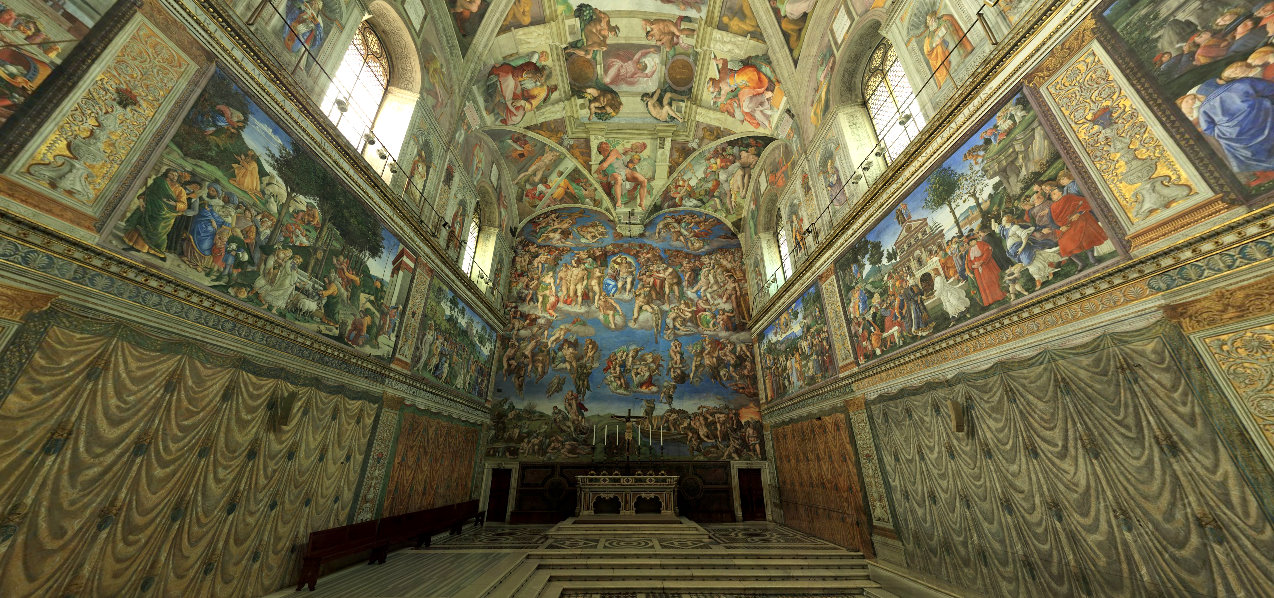
Se det Sixtinske Kapel virtuelt uden at tage til Rom og lægge dig på gulvet på ryggen, som jeg gjorde da jeg var der, da det desværre var under restaurering.
Grünewald, Bach og i år – Arvo Pärt
The final flowering of the Gothic came relatively late, in the work of the German artist, Matthias Grünewald 1470-1528. He was possibly an exact contemporary of Dürer, but while Dürer was deeply influenced by the Renaissance, Grünewald ignored it in his choice of subject matter and style. Much of his work has not survived to this day, but even from the small amount that has come down to us, it is possible to see Grünewald as one of the most powerful of all painters.
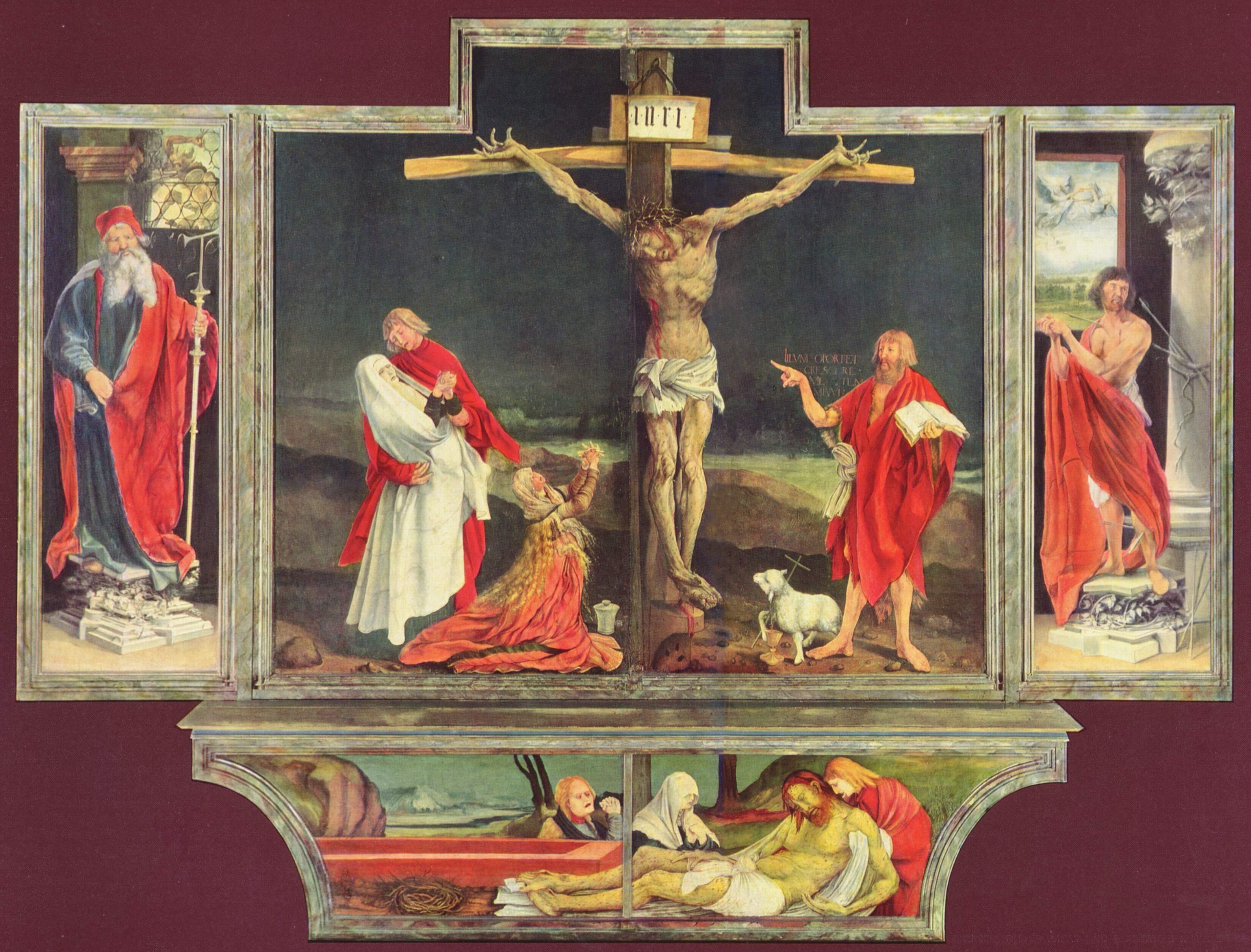
No other painter has ever so terribly and truthfully exposed the horror of suffering, and yet kept before us, as Bosch does not, the conviction of salvation. His Crucifixion, part of the many-panelled Isenheim Altarpiece, is now kept in Colmar.
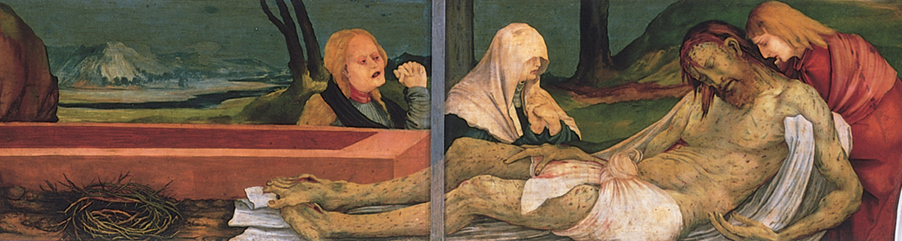
It was commissioned for the Antoinite monastery at Isenheim and was intended to give support to patients in the monastic hospital. Christ appears hideous, his skin swollen and torn as a result of the flagellation and torture that He endured. This was understandably a powerful image in a hospital that specialized in caring for those suffering from skin complaints. Grünewald’s dark vision. (detalje fra Isenheim alteret, helbillede her.)
Arvo Pärt wrote the prayer of piece Da pacem Domine to fulfil a commission from Jordi Savall. He began to set this ninth-century Gregorian antiphon two days after the Madrid bombings on 11 March 2004 as his personal tribute to the victims.Since then Da pacem Domine has been performed every year in Spain to commemorate the victims of this terrorist attack. Even while originally composing this four-voice piece, Pärt made allowances for variable scorings. As a result, it exists in several versions, not only for voice but also entirely for instruments. Estonian Philharmonic Chamber Choir Tallinn Chamber Orchestra