Sendt maj 2013 på Channel Four. Jeg har set den, den trækker tænder ud. Man skønner op til 10.000 mindreårige ofre for indvandrede seksualforbrydere. Sådan ser det ud, når overklassen bekriger de allersvageste i et samfund: forsømte børn.
The investigation, Operation Chalice, eventually encompassed over 100 victims, and around 200 suspected perpetrators. The Hunt for Britain’s Sex Gangs follows – with unprecedented access – a live police investigation, showing just how difficult it is to secure justice for victims of sexual abuse, especially when some girls were just 11 when they were first abused. As the police work with the victims, they begin to understand a vicious cycle of grooming, which starts with flattery and friendship, then moves on to a more overtly sexual relationship, and finally becomes exploitative as the groomers pass the girls around their networks of friends and family for sex.
Fut i forurettelsesindustrien
Weekendavisen havde fredag en lang interessant forsideartikel, “Sverige – De krænkedes land” (ikke online), der blandt andet viser at der er meget større penge i at være fornærmet i Sverige end i Danmark. Det taler til de lavere instinkter i folk, blandt andre alle dem der gerne vil tjene 100.000 på andres bekostning uden at løfte en finger. Industrien stryger dem med hårene. Et par uddrag:
I Sverige kan man få næsten 20 gange mere i erstatning, hvis man afvises på grund af påklædning, end man kan få i Danmark, hvis man afvises på grund af hudfarve. Hvordan kan det være, at de to lande ser så forskelligt på forskelsbehandling? Hvad har gjort, at diskrimination behandles, forstås og straffes så forskelligt på hver sin side af Øresund?. [..]
Overlæge i psykiatri David Eberhard mener, at krænkelserne i Sverige er løbet af sporet. Han er forfatter til en kritisk bog om svensk krænkelseskultur, Ingen tar skit i de lättkränktas land – titlen betyder frit oversat, at ingen finder sig i noget i de let krænkedes land.
»Det er gået for vidt. Du ender med at relativere retfærdighed og diskrimination. Og så ser vi bare, at de, der virkelig er blevet krænket, smides i samme kategori som alle andre. Det bliver betydningsløst,« siger David Eberhard. »Det er blevet sådan, at hvis en person føler sig krænket, så er det op til personen selv at afgøre, om der er tale om en krænkelse. Der er ingen objektive måder at afgøre det på. Det, der sker, er, at hvis en person siger, at han er krænket, så har han ret. Diskriminationsombudsmanden siger altid, at det er ret let at blive offer for krænkelser i Sverige. Og det har de ret i. Det er meget let at være et offer,« siger han.
Ifølge Eberhard eksisterer der et fanatisk, dominerende synspunkt i Sverige: at folk ude i verden simpelthen ikke ved bedre. At de ikke har fattet en brik. Han finder det særligt besynderligt, da kulturrelativismen og socialkonstruktivismen ellers er normen i landet. Eberhards paradoks i kort form: I Sverige er det ikke velanset at kritisere indvandrere for ikke at følge svenske sædvaner. Men det er helt almindeligt at anklage alle andre mennesker uden for Sverige for at være afsporede.
Derhjemme kan man ikke kræve svenske værdier, men kigger man ud på resten af verden, er den svenske måde at opføre sig på den eneste rigtige. »Vi har en tegneserie her i Sverige, som alle er vokset op med: Bamse. I Bamse er alle flinke ved hinanden hele tiden.Vi er vokset op med denne hjernevask. Overalt i samfundet får du at vide, at man altid bare skal være meget, meget flink. Og hvis du ikke opfører dig flinkt, så har folk ret til at føle sig krænkede.« Eberhard anser det for en institutionaliseret måde at flygte fra sit ansvar på.
»Du kan aldrig bebrejde dig selv. Og hvis folk siger, at det er din egen skyld. Well… det kan man slet ikke sige. Så får man problemer. Jeg tror ikke, at det er på samme måde i Danmark. Der er man lidt mere åben for, at folk godt selv kan være skyld i deres egne problemer. I Sverige skal man undskylde, hvis man er succesfuld. Vi har institutionaliseret en særlig måde at opfatte, hvad der er rigtig og forkert, på. I alle andre lande i verden bliver det anset for dårlig stil at kræve noget fra andre til en selv. I Sverige er det omvendt. Her er det nærmest forkert at stille krav til folk om, at de selv skal tage ansvar,« lyder hans forklaring.
I er ligeglade med at blive de bedste i verden. I ved, at I er bedst, men I har ingen grund til at eksportere det. I Sverige ved man også, at man er bedst, men her er man meget interesseret i at være en model for resten af verden,« siger historieprofessor Lars Trägårdh, når han skal forklare, hvorfor Sverige og Danmark er så forskelligt placeret på Mipex’ liste.
»Selv om vi er vældig ens, så er vi meget forskellige på det her punkt. I dag ser vi, at man i Danmark har en stærk kulturel identitet, og at folk føler sig tilpas ved at definere sig kulturelt og stille indvandrere udenfor, hvis de ikke passer ind. I Sverige er det meget kompliceret, fordi den nationale identitet kræver, at man taler politik ud fra universelle begreber og underspiller det kulturelle element. Derfor væmmes svenskerne ofte ved danskernes bekymringsløse omgang med kulturelle argumenter i politik, mens svenskerne ofte forekommer hykleriske i danskeres øjne.« – De krænkedes land, Weekendavisen, 28.06.2013.
Anwar al-Awlaki kunne ikke lide ludere – undtagen i fritiden
The radical American-born Muslim cleric Anwar al-Awlaki spent thousands of dollars on prostitutes while he traveled the country preaching fundamentalist Islam, it had been revealed. The FBI, which was tracking al-Awlaki’s movements, watched as he met at least seven times with prostitutes in the Washington D.C. area between November 2001 and February 2002, according to newly leaked documents. The agency estimated he spent $2,300 on hookers in Washington alone. He is also believed to have purchased the services of prostitutes when he traveled to Florida.
Al-Awlaki reportedly paid $400 to have sex with the woman. She described him as ‘very polite.’The encounter came at a Washington hotel on Feburary 4, 2002 – one day before he was invited to give a presentation at the Pentagon. Al-Awlaki was recruited by the government speak about outreach to moderate Muslims, it was revealed in 2010.
Another prostitute told the FBI that al-Awlaki paid her $300 to watch as ‘as she engaged in erotic behavior and stimulated herself’ in December 2001. They met again for the same activity in January 2002. Despite al-Awlaki’s fundamentalist religious teachings, it appears the married father of five had a history of paying for sex. He was arrested in 1996 and 1997 for soliciting prostitutes in San Diego. He pleaded guilty and paid a fine. Al-Qaeda leader Anwar al-Awlaki ‘spent thousands on prostitutes as he traveled the U.S. spreading his message of radical Islam’.
Denne skinhellige terrorist og pikspiller var altså gift og havde fem børn, mens han rejste rundt og prædikede sit svovlevangelium og bollede købedamer i efter fyraften. 100 piskeslag, ville det have lydt i hans prædiken, men CIA og Obama fandt på en mere håndfast straf, så nu står den på helt gratis jomfruer.
Det er vel hundrede år siden vi for alvor gjorde op med de kristelige hyklere, nu har vi fået nogle endnu værre, ikke mindst takket være de politikere, der slet ikke bryder sig om religion og hvis forfædre var ledende i opgøret med den dengang. Islam er sex og vold og løgn, løgn og hykleri tilsat et kilo kvindehad, og det er så disse politikeres gave til mine efterkommerne. Må jeg bede om en ærlig luder, dem har jeg mødt nogle af, og må jeg bede om Jesus, han foretrak dem også.
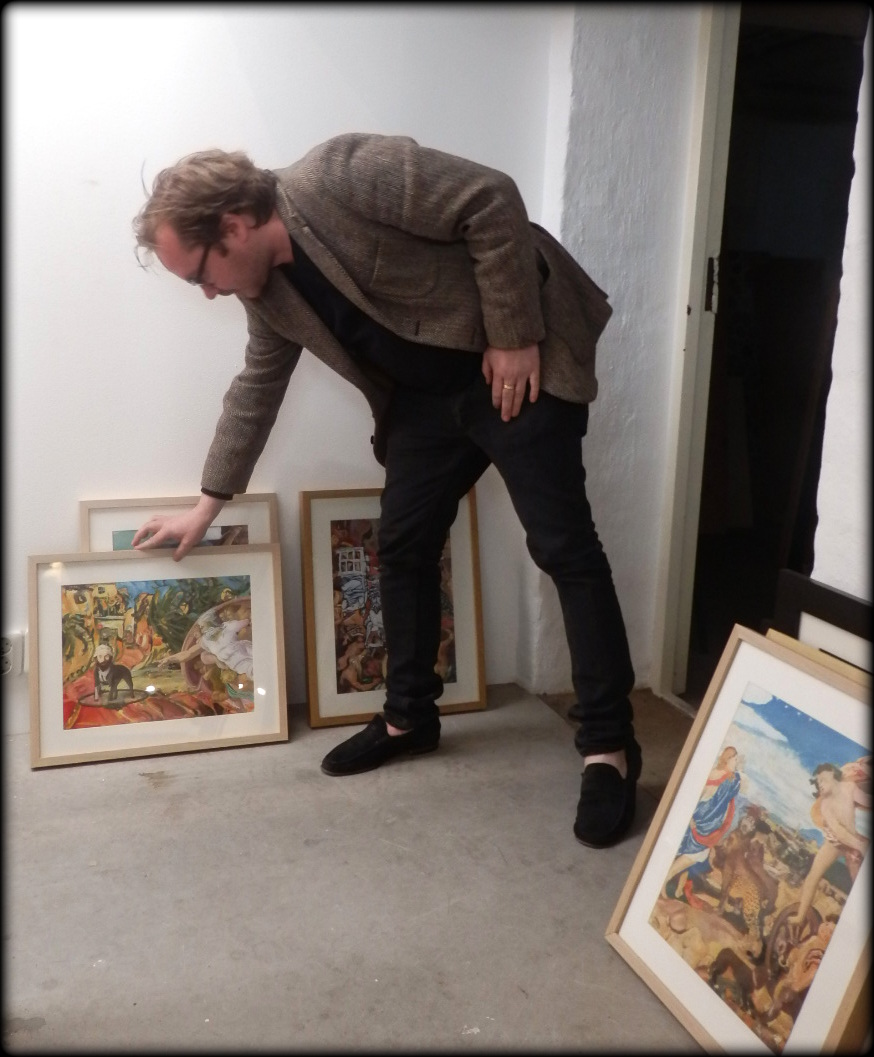 Det är några dagar före vernissagen av Lars Vilks rondellhundsprojekt och galleristen Henrik Rönnquist visar mig runt. De ännu ej upphängda tavlorna är i A3-format och de är målade med olja på papper. Vilks har under våren målat sig igenom konsthistorien. Det enda som vittnar om att något är annorlunda är polisbilen som stannat till utanför och så att fönstren har klätts över med brunt papper